
Tuesday, March 15, 2022


Sizing up Federal MPs Part 1 - Pay Packets
By Jim Beatson
Everyone is interested in the size of pay packets. What’s it like in federal government? Let’s start with the top end, Prime Minister Scott Morrison.
Morrison rates as the fifth highest paid head of a country on our planet. His gross pre-tax salary, is $549,250 per annum or $10,562 per week or $1,505 a day, excluding legal perks. The current global top of the tree is Lee Hsien Loong, Prime Minister of Singapore, on $AUD2,082,583 pa.
Salaries of our Prime Minister, Ministers and all federal members, are a complex mix made up of a base salary, plus loadings as a percentage of their base salary, perks not included.
All our Federal and State pollies are well paid. So I have chosen to look in detail at our local Federal Member for Wide Bay, Llew O’Brien, just because he is ours. Llew was elected at the 2016 Federal Election, and re-elected in May 2019. Before entering Parliament, Llew served as a police officer in the Wide Bay region for 16 years and specialised in criminal intelligence and traffic accident investigation.
As at 1 July 2020, the base salary of all our Federal MPs, like Llew, is $211,250 per annum. But Llew is the Deputy Speaker in the House of Reps, so he gets an additional 20% of his base salary (i.e, $42,250). And as Chair of both the House Petitions Committee and the Joint Select Committee on Road Safety he receives an additional 11% of base for each position (i.e. 2 X $23,237.5 = $46,475). And all MPs receive an annual electoral allowance of $32,000 for memberships of sporting clubs, community groups, essential public duties, etc.
So Mr O’Brien, annual take home pay is $331,975, excluding super and other unreported entitlements. That pre-tax is $6,384 per week.
Perks: Most MPs, who are not residents of Canberra, also receive $294 for each night they are required to stay overnight. In 2017, the last year reported in Parliamentary legislative papers, attendance was for 64 days with the sum paid per Federal Member being $18,816 pa. To save on costs, some Members share accommodation.
All MPs get the cost of up to two fixed telephone services (one of the two lines may be an internet service) plus installation, maintenance, rental, transfers, calls and data costs. If they have a second residence, they may elect one service to be reimbursed for their second residence.
After three years in office, MPs get the equivalent of an around-the-world first class airfare for overseas study tours as well as generous internal work-based flights
MPs get a private plated vehicle (luxury cars excluded), which operates like a salary sacrifice system: the government purchases and the user pays fees. Fuel/servicing costs are covered by taxpayers. MPs not choosing a plated car, receive an electorate allowance of $19,500 per annum for their own car.
When a member leaves politics, former MPs get three return trips to Canberra or the location of their former office per year, plus a complex travel allowance. Former members of Parliament who served more than three years of continuously, who wish to re-train for future employment, may receive six months of their base salary ($105,625).
As an MP Lew’s Super will be 2.3 times the contributions paid by him during his period of service or, if that period exceeds 8 years, during his last 8 years.
And income for the rest of us? According to Living-in-Australia.com “the national average wage is $89,122” pa. SalaryExplorer.com says the spread is from $23,000 pa (lowest average) to $405,000 pa (highest average, although actual maximum salary is higher)”. The Parliamentary web-site sets average Aussie wage at $65,540 with MPs salary 3.2 times greater. And that’s excluding all the perks listed above.
Note - Researching disclaimer:
It's not been easy researching these figures, as each figure appear comes from one of three categories of payments, each appearing in a different, almost incomprehensibly complex Parliamentary websites. Despite a multitude of phone calls to multiple Parliamentary staffers I only found one who could actually answer some of my questions in normal language. My best informant was a well-known Parliamentary journalist, who suggested that they were so flat out, all they could do was to just point you at one of the three websites.
REVEALED: Gifts, houses and assets held by Qld MPs
https://www.couriermail.com.au/news/queensland/qld-politics/politicians-perks-criticised-by-information-commissioner/news-story/5442a89d230df55ea74aea9ec736e11b

Monday, March 14, 2022

Since I moved to Kandanga in Dec 2020, 30 minutes from Gympie in Qld I have been writing a story for each month's Gympie Living.
Here is my first story starting in March 2021:
Book Review: The Carbon Club by Marian Wilkinson, Allen & Unwin
HOW AUSTRALIA BECAME AN INTERNATIONAL PARIAH ON CLIMATE CHANGE. By Jim Beatson
Marian Wilkinson’s new book explains how huge oil and coal interests in the United States and Australia cooperated for over 20 years to prevent successive Australian Governments effective action on climate change. Today these interests hold majority control of the federal Liberal and National parties. How? By influencing in candidate pre-selection contests, funding and organising support for hard right candidates, including social media postings, all supported by Murdoch’s media commentators.
Investigative Journalist, Marian Wilkinson, is a giant of Australian journalism. She won two Walkley Awards for her work as reporter and producer of ABC's Four Corners program. Her meteoric rise started as reporter for community radio 4ZZZ, Brisbane, leading to New York and Washington correspondent for both ABC and Fairfax newspapers. In 2018, she was inducted into the Australia’s Media Hall of Fame.
The Carbon Club started years ago as a UK-funded TV documentary. Then Wilkinson was told by the film company, “Kevin Rudd's been elected…that's all dead now, you've got big climate action in Australia. Well, of course, you know, 13 years later, we're still waiting. And when I left Four Corners at the beginning of 2018, a lot of people were pressing me to write a book, and I was equally determined.”
The book works through the obvious villains: Abbott, Murdoch, Morrison, media shock jocks and social media. But Wilkinson introduces equally important but obscure players like Hugh Morgan, the principle owner of Western Mining, and Sen. Cory Bernardi.
“Hugh Morgan,’ Wilkinson writes “is a fascinating character, his real power came through the [dominant] Victorian state branch of the Liberal Party… and that power then emanated out from there [with Morgan] Chairman of its cash cow, the Cormack Foundation, … one of the most important funders of the Liberal party federally and of its Victorian and Western Australian divisions."
“[Morgan] would later say “ deep connections between the Australian and US climate-sceptic movements created the deluge of emails and calls had swung the vote [for Tony Abbott] against Turnbull...This was the first time in Australian political history that a political leader has been deposed by the rank and file of the party."
Wilkinson describes the rise Cory Bernardi. “He got his place in the Senate thanks to his mentor, Nick Minchin...he became a vocal defender of Australia's climate sceptics. Morgan's factotum was Ray Evans, still Australia's most influential campaigner against climate science...”
Impressed by Evans and Morgan’s apparent effectiveness, Bernardi left a position in Prime Minister Howard's office, moved to the US in 2008 and “met with a whole range of different organisations over there, the activist organisations in the tax space, in the freedom space, in the smaller government space, in leadership development. I kind of became their go-to person in Australia”.
Bernardi signed up for a training course with the Leadership Institute in Virginia where he learnt about using what he described as "voter databases and online technology to mobilise grassroots campaign...These tools would prove vital in the fight to block Labor’s climate change policy."
Bernardi watched the billionaire fossil fuel barons, the Koch brothers and their billionaire allies, poured hundreds of millions of dollars into countless Political Action Committees and lobbyists. They finally took over the Republican Party, its membership, and through preselection contests, determine Republican candidates in state and federal elections.
On returning to Australia, Bernardi’s influence on Minchin, and later Andrew Robb, made opposition to action on climate change a defining Coalition policy.
Wilkinson equally examines all the compromises and divisions between Labor and the Greens over climate change policy options. She presents a brilliant forensic examination of the dysfunctionality of Australia's federal political system.
For anyone interested in the backstory of Australian government processes, Marian Wilkinson’s analysis is a must read (including 101 pages of Chapter Notes)
Marian Wilkinson is speaking about her book and joining a Q & A at the Maleny Community Centre, 23 Maple Street, Maleny on Thursday 8 April 2021 at 6:00 PM to 8:00 PM. Event organised by www.outspokenmaleny.com. Book tickets online fast.
- ends
Thursday, March 3, 2022
From the period August 2020 until December 2021 I resumed being a Radio Journalist at my local radio station, Bay FM, Byron Bay, (where you will find my stories appearing in the Community Newsroom section of http://programs.bayfm.org/community-newsroom) serving New South Wales Northern Rivers region, and still contributing the odd story the The Byron Echo.
In December 2021 I moved to Kandanga, just 20ks south of Gympie in Queensland and commenced writing for Gympie Living, a local monthly magazine where I cover major political issues at a local, state or national level.
Friday, July 17, 2020
Echonetdaily 17 July 2020
https://www.echo.net.au/2020/07/are-byron-visitors-following-covid-19-safe-practices/
Are Byron visitors following COVID-19 safe practices?
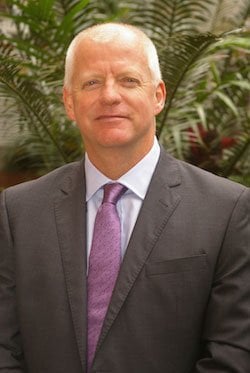
Jim Beatson
The identification of a new case of COVID-19 arriving at Ballina airport earlier in the week has reminded everyone in the Northern Rivers that there is still a need to practice social distancing, hand washing and begs the question should we all be wearing masks?
‘There is no need for greater effort from medical institutions like Byron Hospital or the Northern NSW Local Health District to issue a statement regarding the need for social distancing and the wearing of masks given Byron Bay’s many visitors,’ says Wayne Jones, the Chief Executive Officer for Northern NSW Local Health District.
Mr Jones explained that ‘There have been COVID cases previously in Byron Shire but, all bar one, has recovered and the latest one is in the postcode 2480 which excludes Byron Shire (It mainly consists of East Lismore, but does include Federal, Rosebank, Booyong, Dunoon, Corndale and Clunes)’.
When asked why so few people in public places in Byron Bay are not wearing masks Wayne Jones initially deflected the question saying, ‘I think it’s up to individuals to decide whether to wear a mask. There is no real evidence that compulsory mandated wearing of masks has a huge benefit.’
However, mask wearing is part of a comprehensive strategy to avoid COVID-19 transmission when social distancing is not possible or you are in an area where there is high community transmission. Currently mask wearing is being recommended in Victoria for people who are leaving the house who are living in an area with stage three restrictions.
When pressed Mr Jones added, ‘In saying that, I’m certainly not against it and if people feel more comfortable wearing a mask and we certainly are seeing an uplift in people wearing masks in our communities. So I strongly recommend any strategy that reduces the risk of COVID coming into our community, including the wearing of masks.
‘We are pushing very hard, reminding people of all of those strategies, physical distancing, and where appropriate, hand and respiratory hygiene. And we will continue to do so. With the latest case that’s been identified in our patch we will reinvigorate our campaign.
‘Now is not the time to be complacent. COVID is going to be here for an extended period of time. So just accept that physical distancing and hand and respiratory hygiene are here to stay.
‘But I want to emphasise the vast majority of people on the North Coast are doing the right thing.’
Subscribe to:
Posts (Atom)